

Relucent Key Insights: When you feel unmotivated or stuck, nothing is “wrong,” with you.
- Maslow’s hierarchy of needs is a five-level model explaining how human motivation shifts from basic survival needs to personal growth.
- The five levels are physiological needs, safety needs, belonging, esteem, and self-actualization.
- Lower level needs often take priority because the brain focuses on stability and safety before higher-level goals.
- The hierarchy is a flexible framework; people can experience multiple levels at the same time rather than in a strict sequence.
- The model helps identify which needs feel unmet and how that affects motivation, emotional well-being, and daily functioning.
You might have shelves or digital libraries full of self-improvement books and drawers filled with half-empty journals, yet the thought and act of getting out of bed still feels too heavy. Work that once felt exciting and energizing now feels like trying to walk through mud, carrying a backpack full of weights. You might even be wondering, “Why can’t I just push myself like everyone else?!”
Does this sound familiar? Maslow’s hierarchy of needs can give you a different lens. Instead of seeing yourself as “lazy”, or “unmotivated,” you can start to see how your basic, emotional, and growth needs interact with each other.
Many psychologists still talk about Maslow’s hierarchy of needs today—and while we no longer see it as perfect or a strict formula, it remains a constructive framework to get you thinking about human motivation, mental health, and what you need to feel more steady and fulfilled.
Table of Contents
What Are the 5 Levels of Maslow’s Hierarchy of Needs?
Abraham Maslow, an American psychologist, created a five-tier model of human needs often shown as a pyramid. At the bottom sit basic survival needs, and at the top sits self-actualization—living in alignment with your values and your potential.
The main idea of Maslow’s hierarchy of needs is relatively simple: when your more basic needs feel threatened or unmet, your mind naturally focuses on those needs first. As those needs feel more secure, you have more capacity to care about relationships, self-esteem, and growth.
Currently, mental health professionals use this model as a guide rather than a strict rule. It can be an excellent tool to help you and your therapist explore questions like, “What do I need most right now?” and “What layer feels the shakiest?”
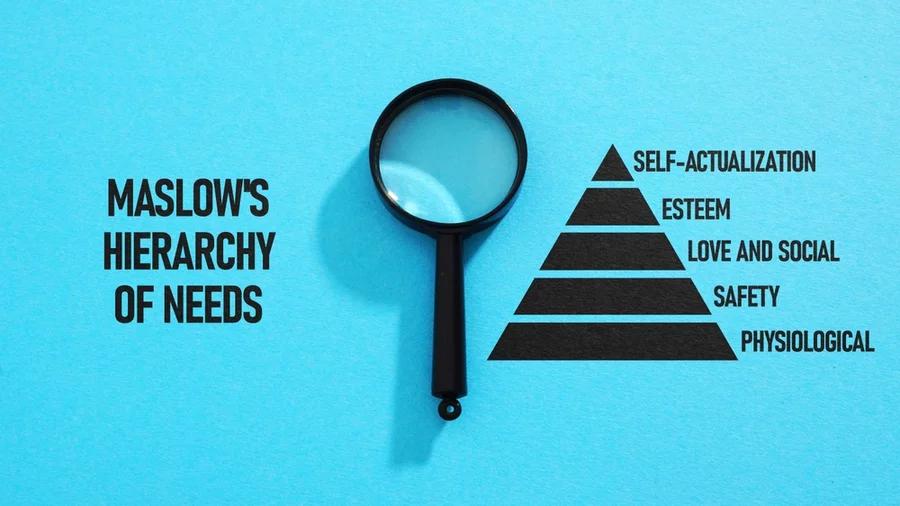
Here are the five levels of Maslow’s hierarchy of needs.
1. Physiological Needs
Physiological needs are your most basic survival needs. These include things like:
- Food and water
- Sleep and rest
- Shelter
- Breathable air and physical health
When these physiological needs are not met or begin to feel unreliable, your body and brain can go into survival mode. It can feel almost impossible to focus on things like long-term goals or any self-improvement when you’re exhausted, hungry, and unsafe in your own body.
If you live with depression, you might notice this level frequently. Things like brushing your teeth, showering, getting out of bed, deciding what to cook and eat regularly, or maintaining a sleep routine can feel like monumental tasks. It makes complete sense that motivation for “bigger” goals feels lower than ever when these physiological needs already take so much energy.
2. Safety Needs
Once basic survival needs become somewhat stable, your attention often shifts to your safety needs. These include:
- Physical safety
- Financial stability
- Emotional safety in relationships
- Predictability and structure in daily life
You might look for a steadier job, a safer living situation, or setting healthier boundaries to protect your emotional well-being. When safety feels impossible or unstable—maybe due to job stress, housing worries, or unstable relationships—anxiety can rise, and your system may stay stuck on high alert.
3. Sense of Belonging
The third level centers on your need to belong and feel emotionally connected. This can include:
- Friendships
- Family or chosen family
- Romantic or intimate relationships
- Communities, groups, or identities where you feel seen
We as humans are absolutely wired for connection. When you feel alone, misunderstood, or left out, your emotional pain can feel as intense as physical pain. Depression can make this level very tricky—you crave closeness and at the same time feel far too drained or anxious to reach out.
Learning to understand this level of Maslow’s hierarchy of needs often softens the harsh, inner self-criticism. Wanting connection is not “needy.” It is a core human right.
4. Esteem Needs
Esteem involves how you view yourself and how you believe others see you. They include:
- Feeling competent and capable
- Feeling respected and valued
- Having a sense of accomplishment
- Believing you matter
You might notice these needs when you think about promotions, recognition at work, creative achievements, or simply feeling proud of yourself. When these needs feel unmet, you might feel small, invisible, or like you are “failing,” even when you objectively do a lot.
Depression can distort this level. A saying you may be familiar with is: “Depression lies.”
You might meet many of your goals and still feel like you are not enough. Therapy often explores how internal beliefs, old stories, and perfectionism affect your self-esteem.
5. Self-Actualization
Self-actualization sits at the top of the pyramid of needs. It answers the question: What is self-actualization?
Self-actualization means living in a way that feels deeply true to you. It can include:
- Pursuing creative or meaningful work (Paint, knit, volunteer)
- Living by your values
- Expressing your identity freely
- Growing, learning, and contributing in ways that feel fulfilling to you
Maslow believed fewer people reach this level consistently, and that’s okay. Self-actualization does not mean you become “perfect” or always happy. Instead, you move toward a life that feels aligned and authentic, even with ups and downs.
Can You Skip Levels of Maslow’s Hierarchy of Needs?
In real life, needs rarely line up in a perfect ladder. You might meet some higher-level needs while still struggling with lower-level ones. For example, you might create beautiful art (self-actualization) while dealing with financial stress (safety).
Maslow presented these layers in an order that can easily cause you to think they unfold in that precise order.
Not exactly—but you can experience multiple levels at the same time. Your needs overlap and shift. You might feel mostly stable in your physiological needs and safety, then a job loss or breakup suddenly pulls your attention back down the pyramid.
Instead of attempting to use the model as a rigid rule that shouldn’t be broken, use it as your gentle map. Let it assist you in noticing:
- Which needs feel supported right now?
- Which needs feel neglected or fragile?
- Where might you start if everything feels overwhelming?
Why Is It Helpful to Keep Maslow’s Hierarchy of Needs in Mind?
Grasping onto what Maslow’s hierarchy of needs is can bring you more compassion into your inner world. When you feel as if you’re walking under thousand of feet of water trying to find motivation, feel stuck, or numb, instead of asking, “What’s wrong with me? Why am I like this? Am I broken?” ask yourself: “Which of my needs feels unmet right now?”
You might slowly realize:
- Your sleep and appetite have changed
- You don’t feel safe at work or at home
- You feel disconnected from friends or community
- Your inner critic is constantly telling you that you are failing or a failure
Please take note, this awareness does not fix everything overnight, but it gives you a starting point. You may find yourself having to start again gently.
But we encourage you to try. You can make small, realistic shifts—like reaching out to one supportive person, adjusting your workload, or practicing a tiny moment of self-kindness.
Therapy can support you in exploring these different levels with care. Together, you and your therapist can look at your unique “pyramid of needs,” notice what your nervous system prioritizes, and experiment with new ways to meet your needs in daily life.
If depression makes every level of this hierarchy like too much, too hard, or too heavy—we see you, and you should not have to navigate it by yourself.
If you live in or near San Jose (including Campbell, Cupertino, Los Gatos, Mountain View, Saratoga, or Sunnyvale), we’re here to walk alongside you.
When you’re ready, when you have a moment when the weight seems to ease, you can always schedule depression therapy with us here at Relucent Psychology Group.
We move at a respectful pace that feels supportive for you as you begin to take your journey to understand what you need, soften your self-judgement, and take the small steps toward feeling more grounded, more you, and more alive.